
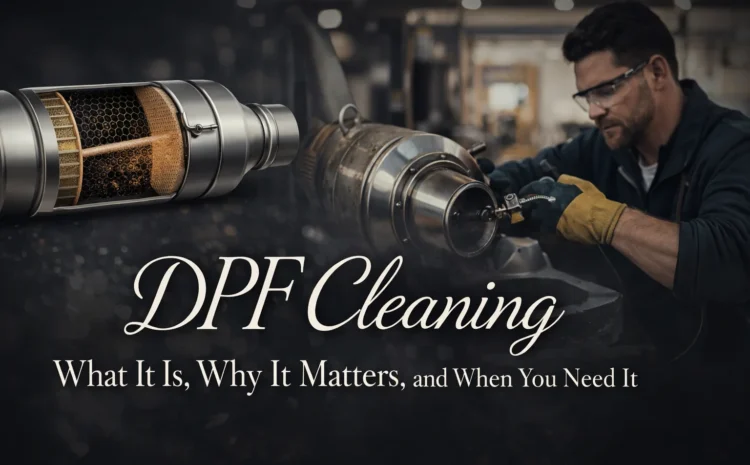
DPF Cleaning: What It Is, Why It Matters, and When You Need It
Diesel vehicles are known for their strength, fuel efficiency, and long lifespan. However, modern diesel engines rely on complex emission systems to meet strict environmental rules. One of the most important parts of this system is the Diesel Particulate Filter(DPF).
Many drivers hear about DPF problems only when something goes wrong. Dashboard warning lights appear, power drops, or fuel costs increase. At that point, the repair can feel stressful and expensive.
This guide explains what DPF cleaning is, why it matters, and when you should act, helping you protect your vehicle and avoid unnecessary costs.
What Is a DPF and What Does It Do?
A Diesel Particulate Filter is designed to capture harmful soot particles produced during diesel combustion. These particles would otherwise be released into the air.
The DPF sits in the exhaust system and traps soot as gases pass through it. Over time, the filter fills up. To prevent blockage, the vehicle burns off this soot through a process called regeneration.
There are two main types:
- Passive regeneration – happens naturally during long, steady drives
- Active regeneration – triggered by the engine management system
When regeneration works correctly, the DPF stays clean. When it fails, problems begin.
Read More: Top Warning Signs Your DPF Needs Immediate Attention
Why DPFs Commonly Become Blocked
Modern driving habits are the biggest cause of DPF blockage.
Short journeys, stop-start traffic, and low-speed driving prevent the exhaust from reaching the temperature needed for regeneration. As a result, soot continues to build up inside the filter.
Other contributing factors include:
- Frequent urban driving
- Faulty sensors
- Poor fuel quality
- Engine issues such as EGR valve faults
Over time, the DPF becomes restricted and can no longer function properly.
What Is DPF Cleaning?
DPF cleaning is a professional process that removes built-up soot and ash from the filter. It restores airflow and allows the exhaust system to function correctly again.
Unlike additives or forced driving, professional cleaning provides controlled, measurable results. It removes contamination without damaging the filter structure.
DPF cleaning is not a repair—it is preventative maintenance that protects your engine and emissions system.
Why DPF Cleaning Is So Important
Ignoring DPF maintenance can lead to serious mechanical problems. A blocked DPF creates back pressure in the exhaust system, forcing the engine to work harder.
This can cause:
- Reduced engine performance
- Increased fuel consumption
- Turbocharger strain
- Engine overheating
- Emissions failures
In severe cases, the DPF may be beyond recovery and require full replacement.
Professional cleaning helps avoid these risks while extending the life of the filter.
Common Signs Your DPF Needs Cleaning
Your vehicle often gives clear warnings before total failure. Knowing these signs helps you act early.
DPF Warning Light
This is the most obvious indicator. It means soot levels are too high for normal regeneration.
Loss of Power
The engine may feel slow, heavy, or unresponsive during acceleration.
Poor Fuel Economy
Fuel usage increases as the engine compensates for restricted airflow.
Frequent Regeneration Attempts
High revs, loud fans, or strong smells can signal repeated regeneration failures.
Limp Mode Activation
This safety feature limits speed and power to prevent engine damage.
If any of these appear, professional cleaning is recommended.
Different Types of DPF Cleaning Methods
Not all DPF cleaning methods are the same. The right approach depends on the level of blockage.
1. DPF Chemical Cleaning
This is an on-vehicle solution for light to medium soot build-up. A professional cleaning fluid breaks down carbon deposits safely.
It is quick, cost-effective, and suitable for early-stage blockage.
2. Forced DPF Regeneration
When automatic regeneration fails, technicians use diagnostic equipment to trigger controlled regeneration.
This method is effective for moderate blockages but must be done carefully to avoid overheating.
3. Off-Car DPF Deep Cleaning
For heavy blockages, the DPF is removed and cleaned using specialist equipment. This method removes both soot and ash completely.
It restores the filter close to original performance and is the most thorough option.
Why Driving Hard Is Not a Reliable Fix
Many drivers try to fix DPF issues by driving at high speed for long periods. While this can help early-stage soot build-up, it is not always safe or effective.
If the DPF is already heavily blocked:
- Regeneration may fail
- Engine damage may occur
- Warning lights may remain
Professional diagnosis ensures the right solution is applied safely.
How Professional DPF Cleaning Saves You Money
Replacing a DPF can cost thousands. Cleaning costs a fraction of that price.
Regular cleaning:
- Prevents full filter replacement
- Reduces fuel consumption
- Protects engine components
- Avoids unexpected breakdowns
In the long run, proactive maintenance is always cheaper than emergency repairs.
Environmental Benefits of DPF Cleaning
A clean DPF reduces harmful emissions and supports cleaner air. Blocked filters release more pollutants and increase fuel burn.
Professional DPF cleaning helps:
- Lower exhaust emissions
- Improve MOT pass rates
- Support environmental responsibility
It benefits both your vehicle and the environment.
How Often Should a DPF Be Cleaned?
There is no fixed schedule, as usage varies. However, vehicles driven mainly in cities need more frequent attention.
As a general guide:
- High-mileage vehicles benefit from periodic inspection
- Urban vehicles need earlier cleaning.
- Warning lights should never be ignored
A professional assessment determines the best timing.
Final Thoughts
DPF cleaning is not just a service—it is essential care for modern diesel vehicles. Understanding how the DPF works, why it blocks, and when to act can save you money and frustration.
Early cleaning restores performance, improves fuel efficiency, and prevents major engine issues. Ignoring warning signs only leads to higher costs and downtime.
If your diesel vehicle shows signs of DPF trouble, professional cleaning is the smart and responsible solution.